


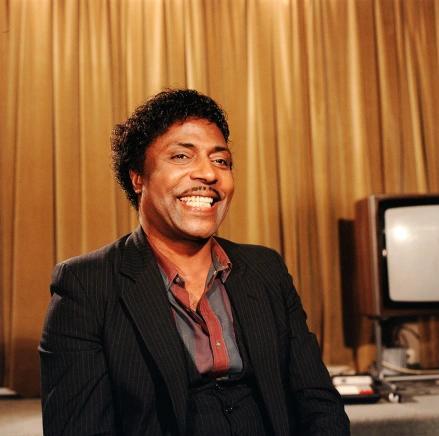
Ernestine Harvin, also known as Ernestine Campbell, lived a remarkably private life despite being connected to one of rock and roll’s most famous pioneers. She became known publicly through her marriage to Little Richard, whose real name was Richard Wayne Penniman.
Unlike her celebrated former husband, Harvin did not build a career around fame. She reportedly worked as a secretary in Washington, D.C., before meeting Penniman at an evangelical rally in 1957. Their relationship developed during a major turning point in his life, when he was moving between rock music, gospel, and Christian ministry.
The couple married in California in 1959 and later adopted a son. Their marriage eventually ended in divorce, leaving Harvin to continue her life away from the spotlight.
Because Harvin valued privacy, many details about her childhood, education, finances, and later years remain unclear. Several websites also publish conflicting birth and death information. Therefore, this profile distinguishes reported information from facts that can be independently established.
Quick Bio Table
| Key Fact | Details |
|---|---|
| Full name | Ernestine Harvin Campbell |
| Also known as | Ernestine Harvin, Ernestine Campbell |
| Reported birth date | October 31, 1935 |
| Reported birthplace | Washington, D.C., United States |
| Reported age at death | About 74 years |
| Reported death date | May 9, 2010 |
| Nationality | American |
| Profession | Secretary, according to available biographical sources |
| Religion | Reportedly Christian |
| Famous for | Marriage to Little Richard |
| Marriage | Little Richard, 1959–1964 |
| Children | One adopted son, Danny Jones Penniman |
| Later marriage | McDonald Campbell, reportedly in 1975 |
| Net worth | Not publicly verified |
| Current status | Reported deceased; details require caution |
Important note: Some online genealogy databases list an Ernestine Harvin born in 1905 and deceased in 2000. That record appears inconsistent with the Ernestine Harvin associated with Little Richard and may represent a different person. The commonly reported biography gives 1935–2010, but those dates should still be treated as reported rather than fully verified.
Early Life and Childhood
Ernestine Harvin reportedly grew up in Washington, D.C., during the 1930s. Public biographies identify her as an American woman who later worked as a secretary.
However, her childhood story is not well documented. There are no widely established accounts of her parents, siblings, neighborhood, or early ambitions. This lack of information is important because many online biographies repeat personal details without identifying reliable primary sources.
Harvin appears to have lived a relatively ordinary life before her connection with Little Richard. Her professional background also suggests that she had established a working life before becoming associated with the music world.
The limited record does not mean her early years were unimportant. Instead, it reflects the fact that she did not seek celebrity status.
In many ways, that privacy became a defining feature of her story.
Family Background and Parents
Little reliable information exists about Ernestine Harvin’s parents or wider family.
Several biography websites state that she was born in Washington, D.C., and came from an African American family. However, specific names and occupations for her parents are not consistently documented in reputable sources.
For that reason, claims about her family background should be approached carefully.
What is publicly known?
The most consistently reported points are:
- Harvin was American.
- She was associated with Washington, D.C.
- She reportedly worked as a secretary.
- Her public profile grew after meeting Little Richard.
- She generally remained outside the entertainment industry.
Her decision to maintain privacy stands in contrast to the highly public career of her former husband.
Little Richard became one of the central figures in early rock and roll. Harvin, meanwhile, remained largely known through her relationship with him.
Education and Early Years
Harvin’s education has not been reliably documented in widely available sources.
There are no well-established records confirming the schools she attended, any college education, or professional training. Consequently, it would be misleading to attribute specific academic achievements to her without stronger evidence.
Her early professional life is more clearly described. Available biographical accounts identify her as a secretary in Washington, D.C.
That occupation placed her outside the entertainment business. She was not a singer, performer, or celebrity personality in her own right.
Instead, her life changed when she met Little Richard during a period of significant religious change in his career.
Career Start and Breakthrough
Ernestine Harvin’s career appears to have been centered on secretarial work.
Unlike many celebrity spouses, she did not use her marriage as a platform for a public entertainment career. There is no strong evidence that she released music, acted professionally, managed a major business, or built a public brand.
Her public breakthrough came through her personal relationship with Little Richard.
The pair reportedly met in October 1957 at an evangelical rally. At the time, Little Richard was moving toward a stronger focus on Christianity and gospel ministry. He would soon form the Little Richard Evangelistic Team and travel across the country preaching.
Their meeting therefore occurred during a fascinating transitional period.
Little Richard had already begun making his mark as a rock and roll innovator. Yet he was also exploring faith and a different direction for his life.
Harvin became part of that chapter.
Major Works and Achievements
Ernestine Harvin did not have a documented career in entertainment, so describing her in terms of albums, awards, or major professional works would be inaccurate.
Her most notable public achievements are connected to her personal life.
Marriage to a rock and roll pioneer
Harvin became the only known wife of Little Richard. Their marriage attracted attention because Penniman was already a major music figure.
Little Richard had helped shape the sound and performance style of early rock and roll through songs such as “Tutti Frutti,” “Long Tall Sally,” and “Good Golly, Miss Molly.”
His influence extended across rock, rhythm and blues, gospel, and popular music. His later legacy included recognition from major music institutions.
Harvin’s role was different. She shared part of his life during a period of enormous personal and professional change.
Adoption and family life
Harvin and Little Richard adopted a young boy named Danny Jones Penniman during their marriage. The couple did not have biological children together. Little Richard reportedly remained close to Danny after the divorce.
This family connection is one of the clearest lasting parts of Harvin’s public story.
Personal Life, Marriage and Family
Ernestine Harvin and Little Richard reportedly began dating after meeting in 1957.
They married in California in July 1959. Sources vary slightly on the exact wedding date, with July 11 and July 12 both appearing in published accounts. A religious history source gives July 12, 1959, while other biographies cite July 11.
Their marriage lasted only several years.
Why did Ernestine Harvin and Little Richard divorce?
The reasons surrounding their divorce have been described differently by the former couple.
Harvin reportedly attributed the breakdown partly to the pressures created by Little Richard’s celebrity. Other accounts discuss the difficulties created by his personal struggles, religious changes, and sexuality.
Because these accounts come from different perspectives, no single explanation should be presented as the definitive story.
What is clear is that the marriage ended in divorce in the 1960s. One well-documented source places the divorce in 1964.
The relationship remains an interesting part of Little Richard’s biography because it took place during one of the most complicated periods of his personal life.
Life after Little Richard
Harvin largely disappeared from public attention after the divorce.
Available biographies state that she later married McDonald Campbell in 1975. Some sources report that this marriage ended the following year. However, information about this relationship is limited, and it should not be treated as fully documented without stronger records.
This relative silence is consistent with Harvin’s overall public image.
She did not appear to pursue celebrity life after her marriage to Little Richard ended.
Lifestyle and Public Image
Ernestine Harvin’s lifestyle was notably different from that of her famous former husband.
Little Richard was famous for his energetic performances, distinctive fashion, colorful personality, and enormous stage presence. Harvin was comparatively private.
That difference makes her story particularly interesting.
She was connected to a cultural icon but did not become a conventional celebrity herself. Instead, public interest in her has largely come from questions about her marriage, family, faith, and life away from the stage.
Reports also describe Harvin as a Christian, which fits the circumstances surrounding her first meeting with Penniman.
However, there is not enough reliable information to create a detailed picture of her personal beliefs or daily lifestyle.
A private figure in a famous story
Harvin’s public image can be summarized through several themes:
- Privacy rather than publicity
- Family rather than entertainment
- Faith during an important period of her life
- A connection to one of rock music’s defining personalities
- A life that largely continued outside the celebrity spotlight
Her story also illustrates how fame can affect people who never actively seek it.
Net Worth and Financial Overview
Ernestine Harvin’s net worth is not publicly verified.
There is no reliable financial record that establishes her personal assets, income, property holdings, investments, or estate value. As a result, assigning a specific dollar figure would be speculative.
Some websites publish net-worth estimates for people connected to famous entertainers. However, these figures often lack documented evidence and should not be treated as financial facts.
Ernestine Harvin net worth: what can be established?
A responsible assessment is:
- Estimated net worth: Not publicly verifiable
- Reliable estimated range: No defensible range is available
- Known profession: Secretary, according to biographical sources
- Celebrity-related wealth: No verified evidence establishes that she inherited or controlled Little Richard’s fortune
- Financial records: Not sufficiently available in public sources
Little Richard himself accumulated considerable wealth during his long career. However, his financial position should not automatically be attributed to Harvin.
The two divorced decades before his death in 2020. Therefore, claims that present his reported estate value as Harvin’s personal net worth would be misleading.
Legacy and Life Today
Ernestine Harvin’s legacy remains closely connected to Little Richard, but her story is more than a celebrity marriage.
She represents the private side of a highly public musical era.
Her relationship with Little Richard occurred at a pivotal moment. He was balancing music, religion, family, and questions about his identity. Their marriage became part of that complicated personal history.
Harvin also became part of Little Richard’s family through the adoption of Danny Jones Penniman.
Her later years, however, remain largely undocumented.
Reports commonly state that Harvin died in May 2010 at approximately 74 years old. Yet publicly available information about her death, burial, and final years is limited. Some online records conflict with these dates and appear to concern other people with the same name.
That uncertainty is worth acknowledging rather than filling with speculation.
Why people still search for Ernestine Harvin
Interest in Harvin continues because Little Richard remains a major figure in American music history.
His influence can be heard across generations of performers. He helped establish the sound, energy, and theatrical attitude associated with early rock and roll.
As a result, people naturally want to understand the people who shared his life.
Harvin’s story offers a different perspective on the famous musician. It highlights the personal world behind an extraordinary public career.
Her life also demonstrates that not every important person in a celebrity biography was famous themselves.
Conclusion
Ernestine Harvin remains a fascinating but deeply private figure in the story of Little Richard.
She reportedly worked as a secretary in Washington, D.C., before meeting Penniman at an evangelical gathering in 1957. Their relationship led to marriage in 1959 and an adopted son, Danny Jones Penniman. The marriage later ended in divorce.
Afterward, Harvin largely stayed away from public attention.
That privacy means many questions about her parents, education, career, finances, and final years remain unanswered. It also means responsible biography writing must avoid turning repeated online claims into established facts.
Her story is ultimately one of quiet connection rather than celebrity.
While Little Richard became a legendary name in American music, Ernestine Harvin lived much of her life beyond the spotlight. Her place in his biography provides a glimpse into the personal relationships behind one of rock and roll’s most remarkable stories.
FAQs
1. Who was Ernestine Harvin?
Ernestine Harvin, also known as Ernestine Campbell, was an American secretary who became known for her marriage to rock and roll pioneer Little Richard. She reportedly came from Washington, D.C., and met Penniman at an evangelical rally in 1957.
2. When did Ernestine Harvin marry Little Richard?
Harvin married Little Richard in California in July 1959. Sources differ slightly on whether the wedding occurred on July 11 or July 12, so the safest description is July 1959.
3. Did Ernestine Harvin and Little Richard have children?
The couple did not have biological children together. They reportedly adopted a young boy named Danny Jones Penniman during their marriage. Little Richard remained close to him after the divorce.
4. Why did Ernestine Harvin and Little Richard divorce?
Accounts differ about the precise reasons. Harvin reportedly pointed to the pressures created by Little Richard’s celebrity, while other accounts describe personal and relationship difficulties. The marriage ended in divorce during the 1960s.
5. What did Ernestine Harvin do for a living?
Available biographical sources describe Harvin as a secretary in Washington, D.C. There is no strong evidence that she pursued a major public entertainment career.
6. What was Ernestine Harvin’s net worth?
Her net worth has not been publicly verified. There is not enough trustworthy financial information to establish a responsible estimated dollar range. Online figures should therefore be treated with caution.
7. When did Ernestine Harvin die?
Several biographies report that Ernestine Harvin died on May 9, 2010, at approximately 74 years old. However, her death information is not strongly documented in the major public sources reviewed for this profile.
8. Is Ernestine Harvin the same person listed in some 1905–2000 records?
Not necessarily. Some genealogy websites list an Ernestine Harvin born in 1905 and deceased in 2000. Those dates conflict with the biography of Little Richard’s former wife, who is commonly reported as having been born in 1935 and died in 2010. The conflicting record may belong to another person with the same name.