


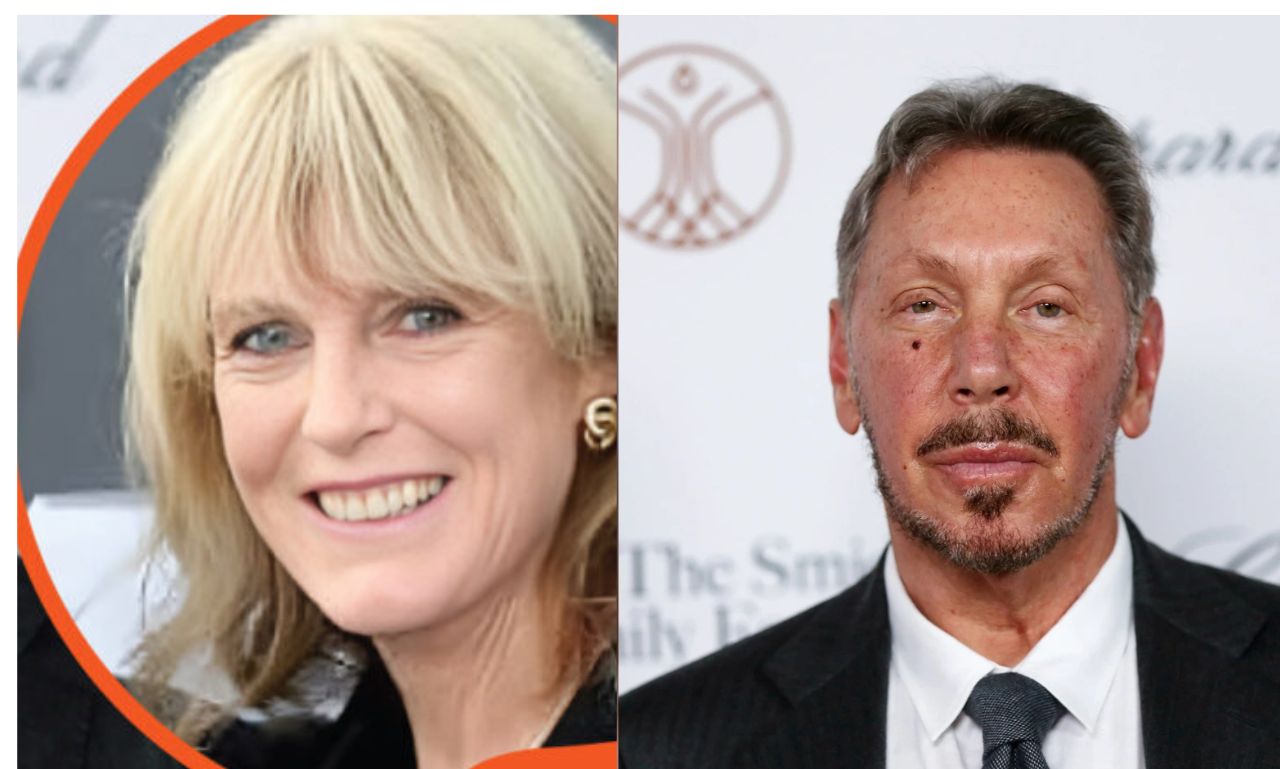
In the world of public figures and influential families, long-lasting marriages and private life decisions often shape legacies just as much as professional achievements. Think of how some names remain in public curiosity for decades, not because they actively seek attention, but because of the people they were once connected to. Even figures like Barbara known through her association with journalist Lester Holt—remind us how certain lives remain quietly tied to public narratives without ever stepping fully into the spotlight.
Within this same sphere of restrained visibility and historical relevance stands Barbara Boothe, a woman whose life became widely recognized through her marriage to one of the most influential tech entrepreneurs in the world, Larry Ellison. Yet her story is not simply defined by that relationship. It is a narrative of privacy, motherhood, and a life intentionally lived away from constant public scrutiny.
Quick Bio: Barbara Boothe
| Field | Details |
|---|---|
| Full Name | Barbara Boothe |
| Birth Year | 1958 |
| Nationality | American |
| Profession | Equestrian enthusiast; Former receptionist |
| Known For | Former spouse of Oracle co-founder Larry Ellison; mother of David and Megan Ellison |
| Spouse | Larry Ellison (m. 1983–1986) |
| Children | David Ellison, Megan Ellison |
| Net Worth | Private, estimated in the millions |
| Residence | Wilsonville, Oregon, United States |
Who is Barbara Boothe and What Is Known About Her Life?
To understand Barbara Boothe, it is essential to look beyond headlines and focus on the quieter layers of her life story. Born in 1958 in the United States, Barbara Boothe maintained a relatively private upbringing and early adulthood. Unlike many individuals later connected to high-profile figures, her life initially unfolded far from media attention.
Before her name became associated with Silicon Valley history, she worked as a receptionist and developed a strong personal interest in equestrian activities. This detail, though often overlooked, paints a picture of someone grounded in routine, discipline, and personal passion rather than public ambition.
Her life changed direction when she met Larry Ellison, a rising entrepreneur who would later co-found Oracle Corporation and become one of the most recognized figures in global technology. Their relationship culminated in marriage in 1983, placing Barbara Boothe at the intersection of rapidly growing wealth, innovation, and public visibility.
However, the marriage lasted only a few years, ending in 1986. Despite the separation, the connection between them remained significant due to their two children, David and Megan Ellison—both of whom would go on to establish notable careers in the entertainment industry.
What makes Barbara Boothe particularly compelling is not the duration of her public association, but the clarity with which she stepped away from it. While many individuals in similar positions remain in the orbit of fame, she chose a life of privacy, eventually settling in Wilsonville, Oregon.
Barbara Boothe and Her Connection to Larry Ellison’s Early Legacy
The story of Barbara Boothe cannot be separated from the early chapters of Larry Ellison’s rise. During the early 1980s, Ellison was building the foundation of what would become Oracle, a company that would redefine enterprise software and data systems globally.
Their marriage occurred during a formative period—before the immense scale of Oracle’s success. In many ways, Barbara Boothe was part of the personal backdrop to a professional transformation that would later reshape the tech industry.
Yet, unlike many narratives tied to billionaires and founders, her presence in that story remains understated. There are no public interviews, no media campaigns, and no attempts to capitalize on association. Instead, her life reflects a consistent theme: separation between personal identity and public legacy.
The couple’s children, David and Megan Ellison, would later become influential figures in their own right. David founded Skydance Media, while Megan became an acclaimed film producer. In this sense, Barbara Boothe remains indirectly connected to both Silicon Valley innovation and Hollywood storytelling—two industries that shape modern culture.
Barbara Boothe: Life Beyond Public Attention
One of the most defining aspects of Barbara Boothe is her commitment to privacy after her marriage ended. While many former spouses of high-profile entrepreneurs remain in public conversation, she chose a quieter path.
Living in Oregon, she has maintained a low-profile lifestyle, away from media cycles and public commentary. This decision reflects a broader theme often seen in individuals who have experienced proximity to fame: the deliberate creation of boundaries.
From a journalistic perspective, this absence of visibility is not emptiness—it is agency. In an era where personal lives are frequently monetized or broadcast, Barbara Boothe represents a different model of existence, one that prioritizes personal space over public relevance.
Her background as an equestrian enthusiast also suggests a lifestyle connected to nature, discipline, and routine. These elements often contrast sharply with the high-intensity environments associated with Silicon Valley and global media industries.
Barbara Boothe: Expert Insight and Editorial Analysis
From an editorial standpoint, Barbara Boothe represents a category of public figures whose significance lies not in constant exposure, but in selective visibility. Her story invites a broader reflection on how society interprets relationships tied to wealth and influence.
In many cases, individuals connected to billionaires or cultural icons are absorbed into the public narrative of the more famous partner. However, Barbara Boothe demonstrates a different outcome—one where identity is not continuously reshaped by external attention.
This raises an important question: what does it mean to maintain personal identity after being linked to global recognition?
In modern media environments, privacy is often treated as an anomaly rather than a choice. Yet Barbara Boothe challenges this assumption. Her life illustrates that stepping away from public discourse is not a retreat, but a form of self-definition.
There is also a generational aspect to consider. During the early 1980s, media exposure of private individuals was far more limited compared to today’s digital ecosystem. Had her marriage occurred in the social media era, the narrative might have unfolded differently. This historical context is essential when evaluating her story through a contemporary lens.
Ultimately, Barbara Boothe reflects the quiet resilience of individuals who exist adjacent to major historical figures but choose not to be defined by them.
Barbara Boothe and the Future Perspective of Public-Private Lives
The relevance of Barbara Boothe extends beyond biography and enters the broader discussion of privacy in modern society. As digital culture continues to blur the boundaries between public and private life, her story becomes increasingly symbolic.
Today, relationships involving public figures are often documented in real time, analyzed across platforms, and permanently archived online. In contrast, Barbara Boothe belongs to an era where personal separation from fame was still achievable.
Looking forward, her life raises important considerations about how future generations will navigate similar situations. Will privacy remain a viable choice? Or will visibility become an unavoidable consequence of association with influence?
In this context, Barbara Boothe serves as a reference point for a different model—one where personal life is not continuously performed for public consumption.
Her legacy, while not defined by public achievements or media presence, is embedded in the quieter narrative of choosing privacy over publicity.
Conclusion
The story of Barbara Boothe is not one of public reinvention or constant visibility. Instead, it is a portrait of restraint, privacy, and quiet continuity. While her name is often recognized through historical association with Larry Ellison, her life extends beyond that chapter.
In a world increasingly driven by exposure, Barbara Boothe represents a counter-narrative—one that values distance, personal boundaries, and a life lived outside the constant gaze of public attention.
Her story ultimately reminds us that not every influential figure seeks the spotlight, and not every legacy is built in public view. Some are defined precisely by what is not shown, but carefully preserved.